

Global Capability Centers (GCCs) are increasingly involved in building products, platforms, and capabilities for global markets. Yet, an important question remains: how much authority do these teams have over the decisions that shape the products they build?
A GCC may have Product Managers, Engineers, Designers, and dedicated Product teams. But if customer problems, roadmaps, priorities and investments are determined elsewhere, its Product mandate may still be largely execution-led.
Building a product is one responsibility. Deciding what deserves to be built and why is another.
Product Ownership Begins with Decision Rights
Decision rights determine where meaningful authority sits within the Product lifecycle. They reveal whether a team is simply executing decisions or actively shaping them.
Consider six areas where this distinction becomes visible:
| Decision area | The question GCC leaders should ask |
| Customer problem selection | Can the team identify and influence which customer problems deserve attention? |
| Roadmap prioritisation | Does it influence what gets prioritised and when? |
| Feature prioritisation | Can it make trade-offs based on customer needs and business value? |
| Product strategy | Does it help shape strategic direction or primarily execute an established plan? |
| Investment decisions | Does it have a voice in resource allocation and investment priorities? |
| Go-to-market (GTM) | Does it influence market entry, adoption and commercial decisions? |
The answers need not be identical across every product. Decision-making can be shared between global headquarters and GCC teams, with responsibilities varying by product, market and organisational maturity.
The important distinction is whether the GCC has a meaningful voice in these decisions or is brought in only after the direction has been established.
Discovery Shapes the Problem. Ownership Shapes the Solution
Decision rights are not limited to choosing features or managing a roadmap. They begin much earlier, with identifying the right problem to solve.
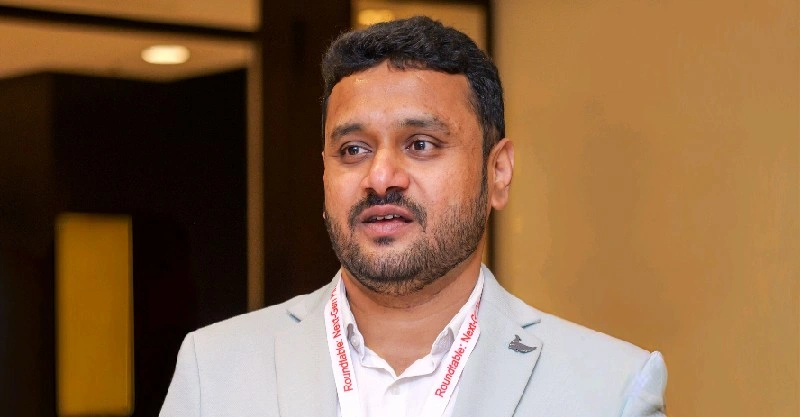
Darshan Khanna, Associate Director, Product Management, Wayfair, highlights this connection between discovery and ownership:
Product influences the problem space based on discovery and then owns the tech solution aligning with stakeholders and customers.
This perspective points to two connected responsibilities. Product discovery helps teams understand which problems matter, while solution ownership requires them to translate those insights into products that address customer needs.
For GCCs, the opportunity is to strengthen both capabilities. Teams need the context to contribute to problem definition and the authority to shape solutions, working closely with engineering, business stakeholders, and customers.
Without this connection, Product teams risk becoming responsible for delivering solutions without having sufficient influence over the problems those solutions are intended to address.
Authority Must Come with Accountability
Greater decision-making authority also brings greater responsibility. Product teams need to understand customer needs, market dynamics, business priorities, and the outcomes they are expected to influence.
This requires more than changes to reporting structures. It calls for clear decision ownership, access to relevant business context, and accountability for measurable outcomes. For GCC leaders, a useful starting point is to examine where key Product decisions are currently made, where the GCC contributes, and where it could take greater ownership.
The objective is not to move every decision away from global headquarters. It is to establish the right decision rights for the right teams, based on their capabilities and responsibilities.
The Next Step for GCC Product Leaders
Who decides which customer problems deserve attention? Who sets priorities? Who owns the outcome?
These questions offer a practical way to assess whether a GCC Product organisation primarily executes a global roadmap or helps shape it.
Answers will differ across organisations, but the underlying principle remains: Product ownership becomes meaningful when responsibility, decision-making authority, and accountability move together.
This article is part of GCC Pulse’s Function Deep Dive series on Product in GCCs.
Explore the full report
How are GCC Product organisations evolving from execution support towards greater influence and ownership?
Our latest report, Inside Product in GCCs: Who Builds, Who Decides, Who Owns? explores decision rights, customer proximity, business impact, Product talent, and AI, concluding with a practical seven-point playbook for GCC leaders.
Download the full report to explore the research, leadership perspectives, and actions for building greater Product authority within GCCs.
Photo by Anton Maksimov 5642.su on Unsplash