
India’s GCC story has largely been about expansion. Global enterprises have built centres, scaled teams and steadily moved more sophisticated work to India. What began as a model driven by cost and talent has evolved into technology, engineering, analytics, product development and innovation.
Now, however, another pattern is emerging: GCCs are changing hands.
The trend is not new. The 2008-09 period saw several prominent captive transactions involving Citigroup, Aviva, UBS and AIG. More recently, transactions involving Danske Bank, Olam’s Mindsprint, Guardian Life and BestBuy have brought the question back into focus.
At first glance, this could be interpreted as enterprises losing faith in the captive model. But there is a more nuanced explanation. As the GCC ecosystem matures, the strategic value of a centre may increasingly determine its future — rather than its ownership structure.
When the GCC Becomes an Escape Hatch
The rapid growth of GCCs has also exposed a fundamental challenge: establishing a centre is easier than making it strategically successful.
Some enterprises build GCCs around a clear mandate, strong leadership and long-term capability development. Others move quickly, driven by talent availability, cost pressures or competitive urgency.
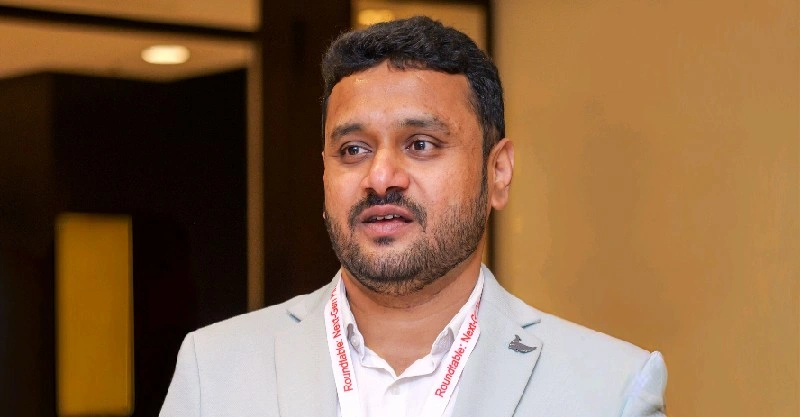
Aveek Mukherjee, Co-founder and Managing Director of Gloplax, believes some centres begin to drift within one to three years, leaving enterprises struggling to justify their original strategic intent.
Talent challenges, rising costs and an inability to mature desired capabilities can eventually leave enterprises with an uncomfortable choice: continue investing or find an “escape hatch.”
That escape may mean shutting the centre down. Increasingly, it can also mean selling or transferring the operation to a technology or business services provider, often with a five- to seven-year business commitment. Aveek expects more such transactions over the next two to three years as enterprises reassess their GCC strategies.
For companies building GCCs today, the lesson is clear: define the desired outcomes before choosing the operating model.
Those outcomes could include cost efficiency, technology transformation, product engineering, AI, innovation, IP or global business operations.
The overarching lesson for enterprises is clear: building a GCC should not be a rushed decision. They need to spend adequate time in defining what outcomes they want out of their global sourcing program, and in case a GCC is the way to go, engage the right partner to custom design a GCC that will deliver the desired outcomes.
Aveek Mukherjee, Co-founder and Managing Director, Gloplax
Two very different GCC trajectories
Not every GCC, however, is equally vulnerable to an ownership transition.
Achyuta Ghosh, Executive Research Leader at HFS Research, sees two broad trajectories.
The first comprises centres built primarily around labour and cost arbitrage. They may employ thousands of people, but do not necessarily own products, IP or a P&L. Their role remains largely execution-oriented.
These centres are relatively transferable. A service provider can acquire an established workforce, domain expertise and, where a long-term contract accompanies the transaction, a committed revenue stream. As Achyuta puts it, “the provider is buying revenue as much as capability.”
The second group is fundamentally different. These are GCCs that own products end-to-end, generate intellectual property and increasingly drive enterprise AI and technology agendas from India.
Such centres are harder to sell because they have become part of the parent company’s competitive advantage.
This distinction could become critical in the next phase of the GCC market. The question is no longer simply whether a centre is captive. It is whether the centre owns strategic capability.
What does India gain?
For India, the growing number of ownership transitions is not necessarily bad news.
If a GCC that might otherwise have been shut down is transferred to a technology provider, the talent and economic activity can remain in the country. The acquired workforce may also gain access to broader technologies, clients and global programmes.
But employment continuity is only one measure.
The bigger question is what happens to the work.
Does the centre continue developing AI, engineering and intellectual property? Does it retain specialized domain knowledge? Does the work move further up the value chain — or does it become conventional delivery?
That distinction matters because a mature GCC can represent years of institutional knowledge, specialised talent, technology capability and IP. Two centres of the same size can therefore have radically different strategic value.
Achyuta’s caution is worth noting:
This split is what I would watch over the next few years. My caution to enterprises is that selling a center transfers an operating problem without delivering an AI agenda. The captive sell-offs back in 2008-09 showed how expensive it becomes to rebuild that capability later.”
An enterprise may solve an immediate operating challenge while inadvertently giving up a capability it later needs to rebuild.
The GCC-Services relationship is changing
The transactions also reveal how much the relationship between GCCs and IT services companies has evolved.
The traditional distinction was simple: GCCs were the internal alternative to external technology providers. Today, service providers help enterprises establish GCCs, compete with them for talent, partner with them on transformation, operate them and, increasingly, acquire them.
The boundary between “captive” and “service provider” is therefore becoming more fluid.
That could ultimately make India’s technology ecosystem stronger — provided the capabilities being transferred continue to grow in sophistication.
A sign of maturity?
GCC ownership transitions should therefore not automatically be viewed as evidence that the captive model is weakening. They may instead signal a more mature ecosystem. One where capabilities are built, tested, transferred and consolidated.
Some centres will prove transferable because their value lies largely in execution and scale. Others will become too strategically important to sell because they own products, IP and critical technology capabilities.
For India, the ultimate measure will not be the number of GCCs that remain captive.
It will be the depth of capability they create, the IP they generate and the value they retain in the country.
The question is no longer simply who owns the GCC.
It is who owns the capability and what that capability is creating for India and the enterprise.
GCC and Captive Ownership Transitions in the Last Two Decades
| Period | Acquirer / Service Provider | Original Owner | Transaction / What changed |
| 2008 | TCS | Citigroup | Captive acquisition: TCS acquired Citigroup Global Services, Citi’s India-based captive BPO operation. |
| 2008 | Wipro | Citigroup | Captive acquisition: Wipro acquired Citi’s India technology captive. |
| 2008 | WNS | Aviva | Captive acquisition: WNS acquired Aviva Global Services. |
| 2009 | Cognizant | UBS | Captive acquisition: Cognizant acquired UBS’s India captive operations. |
| 2009 | MphasiS | AIG | Captive acquisition: MphasiS acquired AIG’s India IT captive. |
| 2023 | Infosys | Danske Bank | Captive/IT-centre transition: Infosys took over Danske Bank’s India IT operations as part of a broader strategic partnership. |
| 2026 | Wipro | Olam / Mindsprint | Captive/business-services acquisition: Wipro acquired Mindsprint, Olam’s technology and business-services arm. |
| 2026 | HCLTech | Guardian Life | GCC acquisition: HCLTech agreed to acquire Guardian Life’s India technology and operations GCC. |
| 2026 | TCS | Best Buy | GCC operations takeover: TCS won the mandate to operate Best Buy’s India GCC. Not a conventional acquisition. |
| 2026 | TCS | Porsche | Broader capability acquisition: TCS agreed to acquire 100% of Porsche’s MHP management and IT consulting subsidiary for €320 million, alongside a five-year strategic partnership worth €1.25 billion. Not an India GCC acquisition. |
Note: The examples above represent different structures, including captive acquisitions, operating transitions, and broader capability acquisitions. They are included to illustrate the increasingly fluid relationship between GCCs and technology services providers.