

Uttar Pradesh Chief Minister Yogi Adityanath has set a target of establishing more than 500 Global Capability Centres (GCCs) by 2031, positioning the state as a destination for advanced technology, innovation and high-value employment. The ambition is to move beyond conventional business operations towards capabilities in artificial intelligence (AI), deeptech, product development and digital engineering.
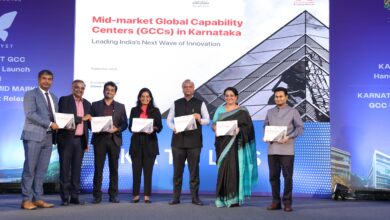
The UP GCC Innovation Summit 2026, held in Lucknow on 26 October, brought together industry leaders, investors, policymakers and academic institutions to explore how the state can attract new investments, develop talent and support the next generation of GCCs. Organised by the IIT Kanpur Alumni Association in collaboration with Invest UP and HCLTech, the summit focused on AI-led transformation, innovation, talent development and expansion across multiple cities.
Lessons from Existing GCCs
During a panel discussion moderated by Achyuta Ghosh, Global GCC Practice Head and India Lead at HFS Research, Jayant Arora, Vice President and CFO at MetLife, shared how the company started with a smaller operation in Noida, gradually took on more complex work and developed the centre into a key global talent hub. Ghosh noted in his LinkedIn post that Arora highlighted how Noida was once considered a Tier-2 location, illustrating the potential of emerging cities to handle complex global work with the right planning and engagement.
Kirti Karamchandani, Head of Government Affairs and Policy at HCL Group, discussed HCL’s decade-long journey in Lucknow, highlighting sustained investment in talent development and academic partnerships as part of the growth of its technology operations.
Prerna Sharma, ACEO at Invest UP, outlined Uttar Pradesh’s GCC policy and the incentives and support available to enterprises looking to establish or expand operations in the state.
Ghosh pointed to the state’s government support, established GCC hubs, academic ecosystem and existing examples in cities such as Lucknow. He also highlighted the opportunity to attract next-generation GCCs with more complex global mandates, AI and product capabilities, and high-value jobs as AI changes the work GCCs do and the skills they require.
Recent GCC Developments in Uttar Pradesh
Four proposed projects worth ₹1,709.84 crore: On 27 October 2026, the Uttar Pradesh Cabinet approved proposals for Letters of Comfort covering four GCC projects in Gautam Buddha Nagar. The proposed investments comprise Havells India (₹879 crore), LG Soft India (₹634 crore), Ameriprise India (₹112.84 crore) and MetLife Global Operations Support Center (₹84 crore). These are proposed investments, not completed projects.
Investment agreements at the summit: The summit saw 15 MoUs signed with companies and talent-development partners, alongside partnerships with 13 educational institutions. Companies identified in summit reporting included EY Global Delivery Services, AML RightSource, Computacenter, MetLife, DSV, DAMAC, Altruist and Smartworks. Smartworks also announced plans for two campuses in Lucknow. These agreements and plans represent potential investment, not operational GCCs.
Existing GCCs and New Operations in Uttar Pradesh
Crowe expands in Noida: Crowe Capability Center–India opened a new office in Noida in August 2026 to accommodate growing teams and strengthen collaboration, reflecting the expansion of an existing operation in Uttar Pradesh.
DAMAC launches shared services operations: DAMAC Group announced DAMAC Shared Services India, with hubs in Noida and Pune. The centre is intended to support international operations across finance, HR, digital, marketing and other business functions. The company announced hiring targets of more than 250 roles in Noida and over 100 in Pune by 2026. Actual hiring progress has not been independently verified.
HCLTech marks a decade in Lucknow: On the 10th anniversary of HCLTech’s presence in Lucknow, Uttar Pradesh Chief Minister Yogi Adityanath inaugurated the Emerging Tech Skilling Center, according to a post by the Chief Minister’s Office. The initiative adds a skilling dimension to HCLTech’s presence in the state, alongside its technology operations and HCLFoundation’s work supporting rural women and Self-Help Groups.
These developments span proposed investments, new infrastructure, and existing-centre expansion. Their impact will depend on how effectively announcements translate into operational capacity, sustained hiring, and increasingly complex work.
Beyond the 500-GCC Target
The number of centres alone will not determine the strength of Uttar Pradesh’s GCC ecosystem. The state will need to connect its investment policies with specialised talent development, infrastructure and partnerships between industry and academia.
Noida’s established ecosystem and Lucknow’s experience in developing technology operations provide a foundation. Enabling other cities to participate could broaden the state’s reach while creating opportunities for enterprises and skilled professionals.
Uttar Pradesh has a strong foundation in government support, established GCC hubs such as Noida, and a large academic ecosystem. However, with Bengaluru leading India’s GCC landscape and Hyderabad strengthening its position in AI, engineering, and product-led work, UP still has considerable ground to cover. Its opportunity lies in building on its existing strengths, developing skilled talent, and attracting GCCs with more complex mandates, AI and product capabilities, and high-value jobs.