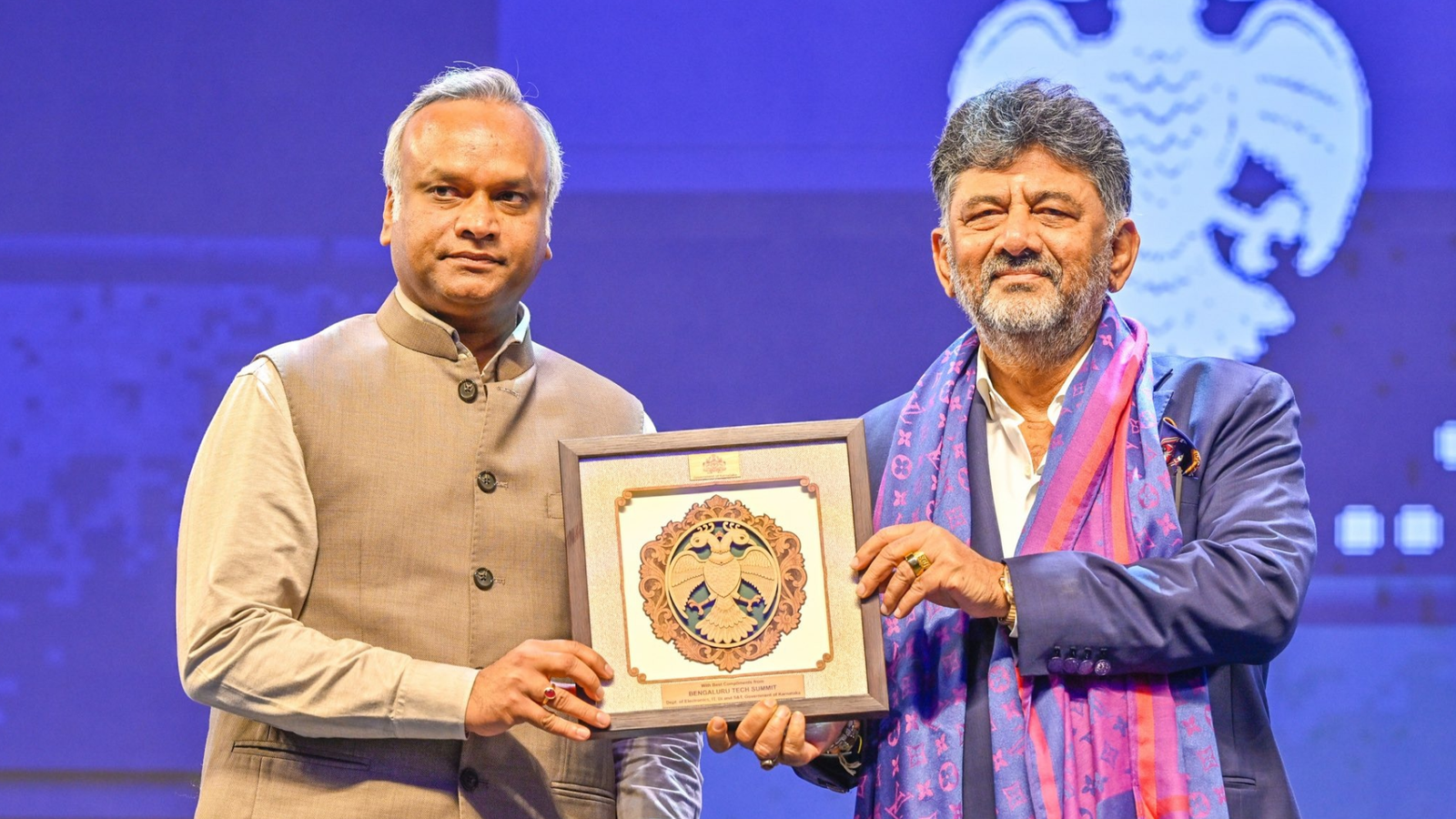
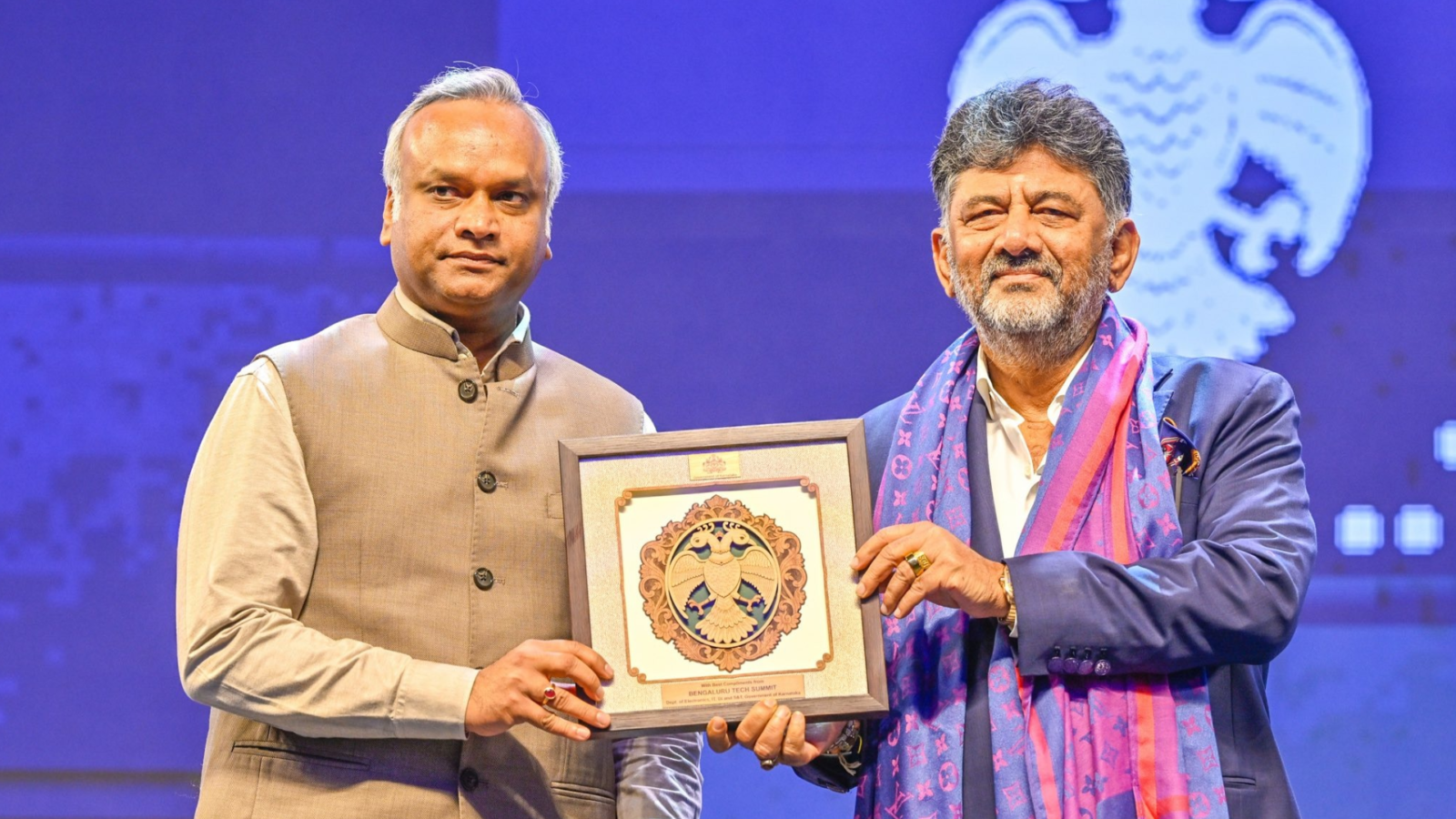
At the inauguration of the 29th Bengaluru Tech Summit 2026, Chief Minister D.K. Shivakumar, Govt. Of Karnataka outlined initiatives spanning AI research, robotics, semiconductor infrastructure, healthcare technology, and startup support. The announcements highlight the state’s focus on connecting research, industry, startups and talent, with relevance to its growing Global Capability Centre (GCC) ecosystem.
Commenting on his X handle, Shivakumar highlighted Karnataka’s investment appeal and policy foundations, stating that the state received USD 9.4 billion in FDI equity inflows in the first half of FY 2025–26, with more than 1,000 GCCs choosing Bengaluru. He also noted:
From India’s first IT Policy in 1997 to our Biotechnology Policy and GCC Policy, Karnataka has consistently created an environment where industry can grow, and innovation can thrive.
Building an AI Ecosystem Beyond Bengaluru
Bengaluru accounts for nearly 50% of India’s AI and machine learning talent, and Karnataka is developing India’s first government-driven AI University.
The Karnataka AI Hub, established at IIIT-Bengaluru, is the first step towards the proposed AI University. The state also highlighted the AI Centre of Excellence at IIIT Raichur, which is expected to extend AI applications across 13 districts of North Karnataka, including agriculture, healthcare, education and small businesses.
Another initiative is BRAINZ, the Bengaluru Robotics and AI Innovation Zone, developed in collaboration with ARTPARK at IISc. The initiative aims to bring together research institutions, industry and startups in robotics, AI and deeptech, with an ambition to catalyse ₹1,000 crore in investments over five years.
Karnataka’s Semiconductor Ecosystem Moves Towards Manufacturing
Karnataka continues to strengthen its position in semiconductor design and engineering while expanding its focus towards manufacturing. During his address, Shivakumar said:
Much of the world begins here. Karnataka has more than 100 fabless chip companies, while three out of every five engineers working in India’s semiconductor capacity are based in Bangalore, and one-fifth of India’s electronics exports are already shipped from our state.
The state is supporting IISc in developing the 2D Innovation Hub, a semiconductor research and development of fabrication and pilot-line facility. INFIfab, being developed with IISc’s Centre for Nano Science and Engineering (CeNSE), will focus on innovation and advanced manufacturing, including chip fabrication, advanced packaging, photonics and quantum technologies.
The state also highlighted investments exceeding ₹23,000 crore in semiconductor research and manufacturing facilities in Bengaluru and Mysuru, alongside its efforts to develop manufacturing clusters.
Healthcare Technology and Emerging Sectors
K-HEAL (Karnataka Health Engineering and Advanced Lifesciences) is a Centre of Excellence (CoE) initiative aimed at strengthening the Healthtech, Medtech and assistive technology ecosystem. It will bring clinicians, researchers, industry, and startups together to develop healthcare technology solutions.
Karnataka is also looking to strengthen its presence in marine biotechnology and the blue economy through its Marine Biotechnology Policy 2026–2031, extending its focus to emerging technology and research-led sectors beyond IT and engineering.
Skilling and Startup Support
Talent development remains another focus of Karnataka’s technology strategy. Nipuna Karnataka, a ₹300-crore reskilling mission, has reportedly made more than 33,000 people industry-ready through industry partnerships, including women returning to the workforce after career breaks.
Separately, the government is partnering with technology companies to skill 63,200 engineering and diploma students and professionals in emerging AI technologies, including generative AI, cloud computing and data analytics.
Startup support was another focus. Through ELEVATE NxT, 33 deeptech startups have received ₹30 crore in equity-free funding since last year. Innoverse Foundation will support deeptech startups, with its accelerator aiming to support 35 growth-stage ventures over five years. ‘Government First’, backed by ₹25 crore, will support government procurement of startup-developed solutions.
Karnataka’s GCC Ecosystem Attracts New Centres
Karnataka has attracted over 100 new GCCs in the first nine months of this financial year, reinforcing its position as a leading global destination for technology and innovation.

Commenting further on his X handle, IT-BT Minister Priyank Kharge said:
Karnataka has attracted over 100 new GCCs in the first nine months of this financial year, reinforcing our position as a leading global destination for technology and innovation.
“At the GCC Roundtable at Bengaluru Tech Summit 2026, I invited industry leaders to work closely with us on investments beyond Bengaluru, talent development through Nipuna Karnataka, industry-led Centres of Excellence, startup mentorship and Government First.
The perspectives shared by industry will be valuable as we take forward our GCC Policy and strengthen Karnataka’s leadership in this sector.”
What These Developments Can Mean for GCCs
Karnataka is home to 1,088 of India’s 2,117 GCCs, accounting for 51% of the country’s centres, according to figures presented by IT-BT Minister Priyank Kharge at the GCC Roundtable during Bengaluru Tech Summit 2026. The state also employs over 4.51 lakh GCC professionals, representing 35% of India’s GCC workforce.
Continued investments in AI, semiconductor research, deeptech, skilling and startup development could further strengthen the capabilities available to GCCs in the state. A growing pool of skilled talent, closer collaboration with startups and research institutions, and infrastructure supporting emerging technologies can enable GCCs to expand their mandates across engineering, product development, research and innovation.
These initiatives also reflect Karnataka’s broader focus on strengthening its technology ecosystem “Beyond Bengaluru” while reinforcing the city’s position as a global destination for technology-led operations and innovation.