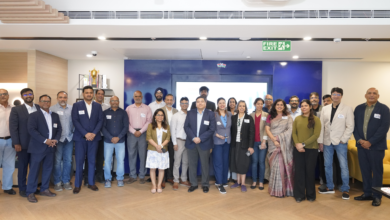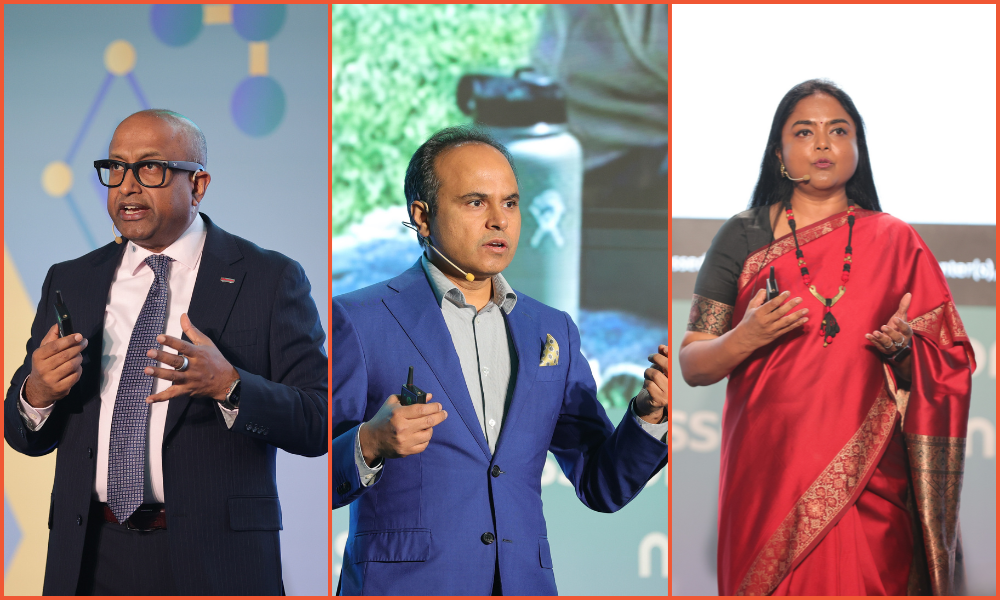
At the 16th edition of the NASSCOM GCC Summit 2026 in Mumbai, India, one theme stood out across sessions and conversations: India’s Global Capability Centers (GCCs) are no longer being viewed only as execution hubs.
Global companies are increasingly assigning greater responsibilities to their India centers — from product ownership and AI-led transformation to business decision-making and global leadership mandates.
The timing of the summit reflected the pace at which the industry itself is changing.
The newly released Nasscom-Zinnov GCC 2026 Landscape report showed that India now has 2,117 GCCs employing 2.36 million professionals and generating nearly USD 98.4 billion in market revenue. More than 506 Forbes Global 2000 companies now operate GCCs in India.
But the report made another point very clearly: the next phase of growth will not be defined by size alone.
From Cost Centers to Business Ownership
Speaking at the summit, Rajesh Nambiar, President, nasscom said the nature of globalization itself is changing.
For years, enterprises optimized around efficiency, scale, and cost. Today, companies are seeking resilience, continuity, trusted operating environments, and long-term capability-building.
“The question is no longer where work can be done cheapest,” he said. “The question now is where companies can build trusted and resilient global operations.”
He pointed to how geopolitical uncertainty, rapid advances in AI, and shifting global business priorities are changing how enterprises think about their GCC strategy.
Rajesh also highlighted how newer GCCs entering India are very different from earlier generations. Many are no longer starting with support functions and gradually moving up the value chain. Instead, they are entering India with product, platform, and transformation mandates from day one.
That transition is also reflected in the report.
According to the study, 96% of GCCs established after FY2021 launched with product or portfolio ownership responsibilities from the start, bypassing the traditional “crawl-walk-run” evolution model that earlier GCCs followed.
AI Is Changing the Nature of Enterprise Work
AI remained central to nearly every discussion at the summit.
Srikanth Velamakanni, Chairperson, nasscom and Co-Founder & Group Chief Executive, Fractal, spoke about how quickly AI systems are evolving and what that means for enterprises globally.
He described how AI systems have evolved from content-generation models into reasoning systems that can learn, self-correct, and solve more complex problems with significantly lower error rates.
Using recent developments from Anthropic as an example, Srikanth explained how AI systems are beginning to move beyond simple automation into areas that require decision-making and adaptive reasoning.
The implications for GCCs are significant.
India today has more than 250,000 AI and machine learning professionals, according to the report, making it one of the largest enterprise AI talent markets globally. But the report also points out that most enterprises have still not redesigned their operating models around AI. The constraint is no longer talent alone, but how organizations adapt around it.
India’s GCC Opportunity Is Expanding
Mamatha Madireddy, MD, Head of HSBC India Global Service Centres, said the global perception of India’s GCC ecosystem is also changing.
“The world is looking towards India not just for scale and cost, but for transformation, resilience, enterprise leadership, and strategic influence,” she said.
According to Mamatha, GCCs today are expected to do far more than deliver services. Enterprises increasingly expect their India teams to own products, shape customer experiences, influence business strategy, and deliver measurable business outcomes.
She also emphasized that leadership development and talent transformation will become critical as GCCs take on larger global responsibilities.
Future GCC leaders, she said, will need a combination of business understanding, AI fluency, cross-functional leadership, and the ability to operate in environments where disruption is constant.
Another area discussed at the summit was the expansion of GCCs beyond established hubs such as Bengaluru, Hyderabad, Pune, Chennai, and NCR.
Industry leaders pointed to growing interest in emerging cities and regional ecosystems, supported by stronger state government engagement and expanding talent availability.
A Different Phase for India’s GCC Industry
One of the clearest takeaways from the summit was that India’s GCC industry is entering a different phase faster than many expected. Only a few years ago, projections estimated that India’s GCC ecosystem would cross USD 100 billion by 2030. The industry is already approaching that figure today.
But speakers at the summit repeatedly stressed that the larger opportunity lies ahead.
Our PoV – The Next Challenge for GCCs Is Authority, Not Scale
While the momentum around India’s GCC ecosystem is undeniable, the industry is also at a point where ambition is beginning to run ahead of organizational change. Many enterprises now speak about India as a strategic hub for AI, product ownership, and transformation, but relatively few have fully restructured governance, operating models, or leadership mandates to reflect that shift.
The next phase of growth will therefore depend not just on expanding GCC footprints, but on how much real authority global enterprises are willing to decentralize into their India operations — especially in areas such as product strategy, AI-led decision-making, and business ownership.